The history of Wormsloe, in the order it happened
Noble Jones and 1736
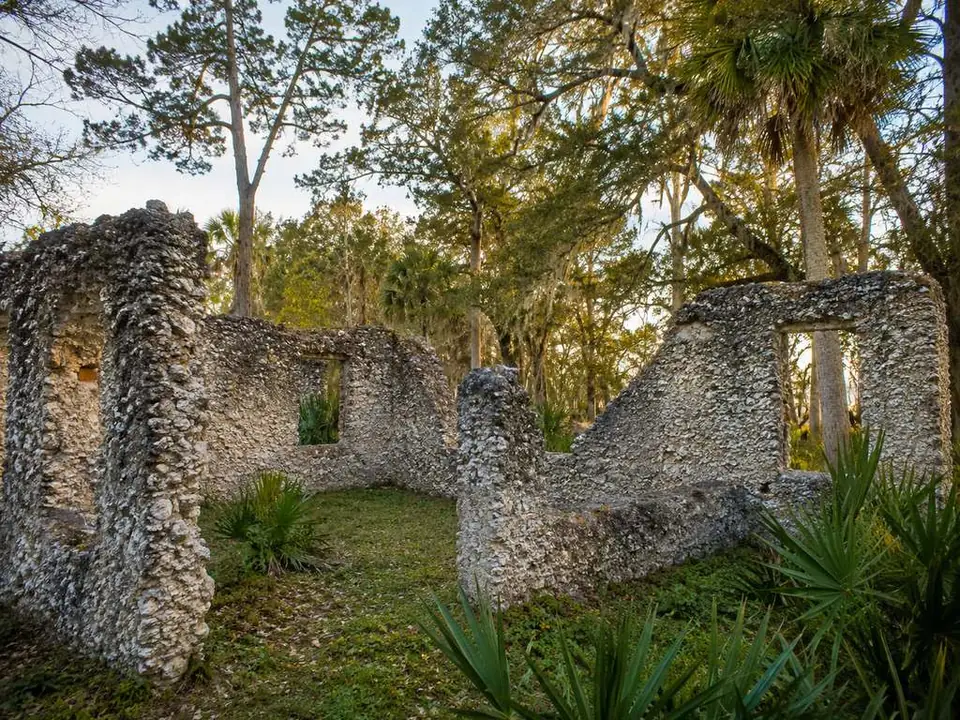
Jones, who lived from 1702 to 1775, came over with Oglethorpe in the first wave of the Georgia colony and started work on Wormsloe in 1736, three years after landing. What he built was a fortified house of tabby, the colonial concrete made from lime, sand, water and oyster shells, on a point of land where the approach up the river could be watched. That is the important thing about the early site: it was a defensive outpost as much as a home, and the ruins you walk up to are the remains of it. They are among the oldest standing structures in the Savannah area — where they sit on the site.
The name
Wormsloe comes from the Jones family connection to Wormslow, also written Wormelow, Hundred in Herefordshire in England. It is not a Georgia word and it does not mean anything local, which is why it looks odd on a road sign. That is the whole explanation, and it is one of the most searched questions about the place.
What the estate was for, century by century
| Roughly | What Wormsloe was | What that left behind |
|---|---|---|
| 1736 onwards | A fortified outpost and estate | The tabby ruins |
| The colonial years | Corn, rice, indigo, rare fruits | Mulberry trees for silkworms |
| The nineteenth century | A cotton plantation worked by enslaved people | The estate’s hardest history |
| Later | Country residence, farm, tourist attraction | The oak avenue |
| 1973 | The state buys the surrounding land | Public access |
| 1979 | A Georgia state historic site | The site as you visit it |
Enslaved labour, stated plainly
Enslaved people were held and forced to work at Wormsloe, and in the nineteenth century Jones’s heirs used enslaved labour to grow and harvest cotton here. That is not a footnote to the estate’s history, it is how the estate functioned, and I am not going to write around it with softer words. The site is beautiful and it was built on that. There is a fuller page rather than a paragraph: the enslaved people of Wormsloe.
One family, three centuries
Wormsloe has remained in the same family since the 1730s, which is unusual enough to be worth saying twice. The state acquired the surrounding land in 1973 and the historic site opened in 1979, but the residence itself never left the family and is still occupied by Noble Jones’s descendants. That is why there is no house to tour: the house question, answered.
What works
- A founding date of 1736, three years after the colony itself began
- Tabby ruins among the oldest standing structures near Savannah
- Continuous family ownership since the 1730s, which is rare anywhere
- A small museum of colonial artefacts that puts the ruins in context
Worth knowing
- The estate was worked by enslaved people, and that history is inseparable from it
- The residence is private, so the family story stops at the avenue
- On-site interpretation is brief, and the ruins say little on their own
- The word plantation attached to the site sets up expectations it does not meet
Read the museum before you walk to the ruins. Tabby walls three feet high are not much to look at until you know that a man landed here in 1733 and started building them in 1736, and then they are.
Hearing the history on site
Very little of this is spelled out along the avenue, which is why the guided version lands better for a lot of visitors. The six-hour trip from Savannah that includes Wormsloe and Bonaventure Cemetery, from $59 and rated 4.8 across 285 reviews, is the only bookable tour that comes inside the gate, and its reviewers name their guides warmly and often. The honest review of it also carries the complaint that matters most here: one happy customer still wished he could tour the house.
Frequently asked questions
Who was Noble Jones?
A colonist who arrived in Georgia in 1733 with James Oglethorpe among the first settlers and began developing Wormsloe in 1736. He lived from 1702 to 1775, and his descendants still occupy the family residence — the house question.
Why is it called Wormsloe?
The name comes from the Jones family connection to Wormslow, also written Wormelow, Hundred in Herefordshire, England. It is an English place name rather than a Georgia one.
What is the oldest standing structure in the Savannah area?
The tabby ruins of Noble Jones’s fortified house at Wormsloe are among the oldest standing structures anywhere near Savannah. Tabby is a colonial concrete of lime, sand, water and oyster shells — where to find them on site.
Were there enslaved people at Wormsloe?
Yes. Enslaved people were held and forced to work at Wormsloe, and in the nineteenth century Jones’s heirs used enslaved labour to grow and harvest cotton here — the fuller account.
When did Wormsloe become a state historic site?
In 1979, six years after the state took ownership of the surrounding land in 1973. The family residence itself never left the family.